
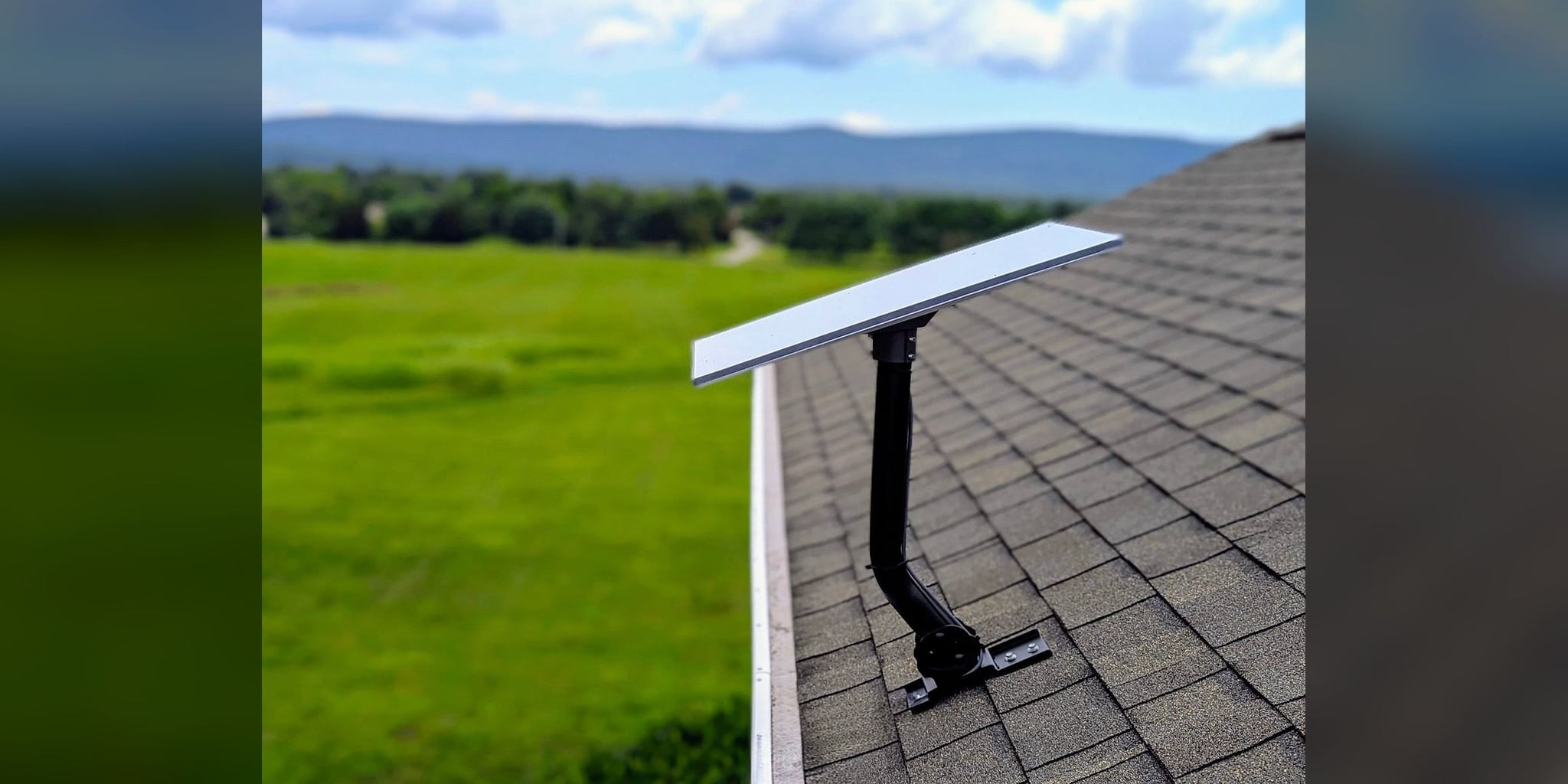
Mountain Home Internet Solution
2,500 ft Elevation • 200 ft Cable Run • Lightning Protection
A mountain installation planned around terrain, tree obstruction, and a 200-foot protected cable path from the dish position to the house, bringing internet to a home that had none.
At a Glance
- Where
- A mountain home at about 2,500 feet in the Blue Ridge, VA, with no wired internet option.
- The problem
- No internet service at the house.
- Constraints
- Steep terrain, heavy tree cover, limited access, and an exposed site where lightning protection was necessary.
- What we did
- A roof position that cleared the canopy, a 200-foot weatherproofed cable run through attic and exterior paths, and a lightning arrestor with surge suppression.
- What we observed
- 155 Mbps observed at commissioning.
- How it was checked
- Measured at commissioning; documented handoff in August 2025.
- Limits of this record
- One reading at commissioning. Starlink speeds vary with the plan, network congestion, weather, and obstruction.
- Related service
- Starlink Installation · Discuss Your Project
Remote Mountain Homeowner • 2,500 ft Elevation • Zero Internet Options
Blue Ridge Mountains, VA
Timeline: Half-day installation
The Orbit ProtocolWhat the property needed
The homeowners were at 2,500 feet elevation with no wired internet options and a property that made access, mounting, and routing more difficult than a standard residential install. They needed reliable service for remote work and daily use, but the site conditions required a careful field approach.
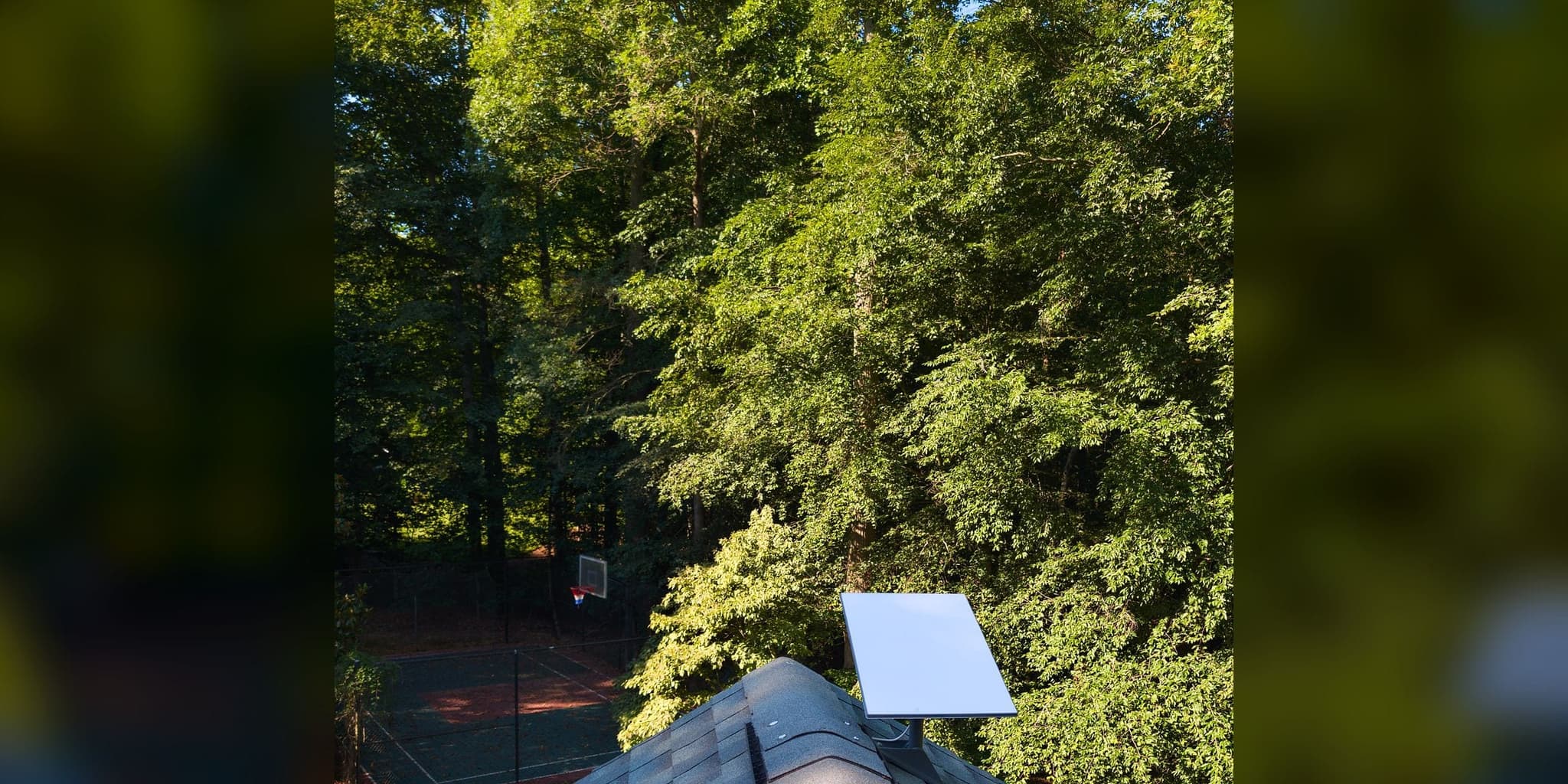
Steep terrain, heavy tree cover, and limited access made both dish siting and cable routing more involved than normal. The optimal sky view required a roughly 200-foot path back to the house, and the exposed mountain environment made grounding and surge protection non-optional.
What we did
We selected a roof position that cleared the available canopy, engineered a clean 200-foot cable route through attic and exterior paths, and added lightning protection and surge suppression suited for an exposed mountain install. The goal was not just to bring service online, but to do it in a way that would hold up over time.
The Orbit ProtocolHow the project ran, phase by phase
Every project follows the same four steps: look at the property, design, install, then test, explain, and hand over.
Understand the property
The terrain review covered elevation, tree canopy, dish visibility, the practical cable path back to the structure, and the grounding conditions needed for a high-exposure site. The survey work mattered because mount location and cable route had to be solved together.
Recommend a plan
The final design paired a canopy-clearing dish position with a 200-foot protected cable route and proper weatherproof entry strategy. Lightning arrestor and surge protection were specified as core parts of the installation, not accessories.
Install with care
The half-day install included roof mounting, full cable routing and concealment, weather-sealed entry points, and lightning protection. The completed path was built to survive weather and seasonal conditions rather than simply pass a same-day speed test.
Test, explain, and hand over
The homeowners received a documented baseline, cable route notes, and maintenance guidance, including what to watch for as tree growth changes the environment over time.
What changed, and how it was checked
At commissioning the home measured 150+ Mbps, enough for remote work and streaming. The mount, cable route, and grounding were built for mountain weather; no service history since commissioning is on record.
Limits of this record: One reading at commissioning. Starlink speeds vary with the plan, network congestion, weather, and obstruction.
Before and after
| Metric | Before | After |
|---|---|---|
| Download Speed | 0 Mbps (no service) | 155 Mbps Starlink |
| Internet Availability | None | Online at commissioning (test length not recorded) |
| Cable Run | N/A | 200 ft from the dish position to the house, weatherproofed |
From the installation
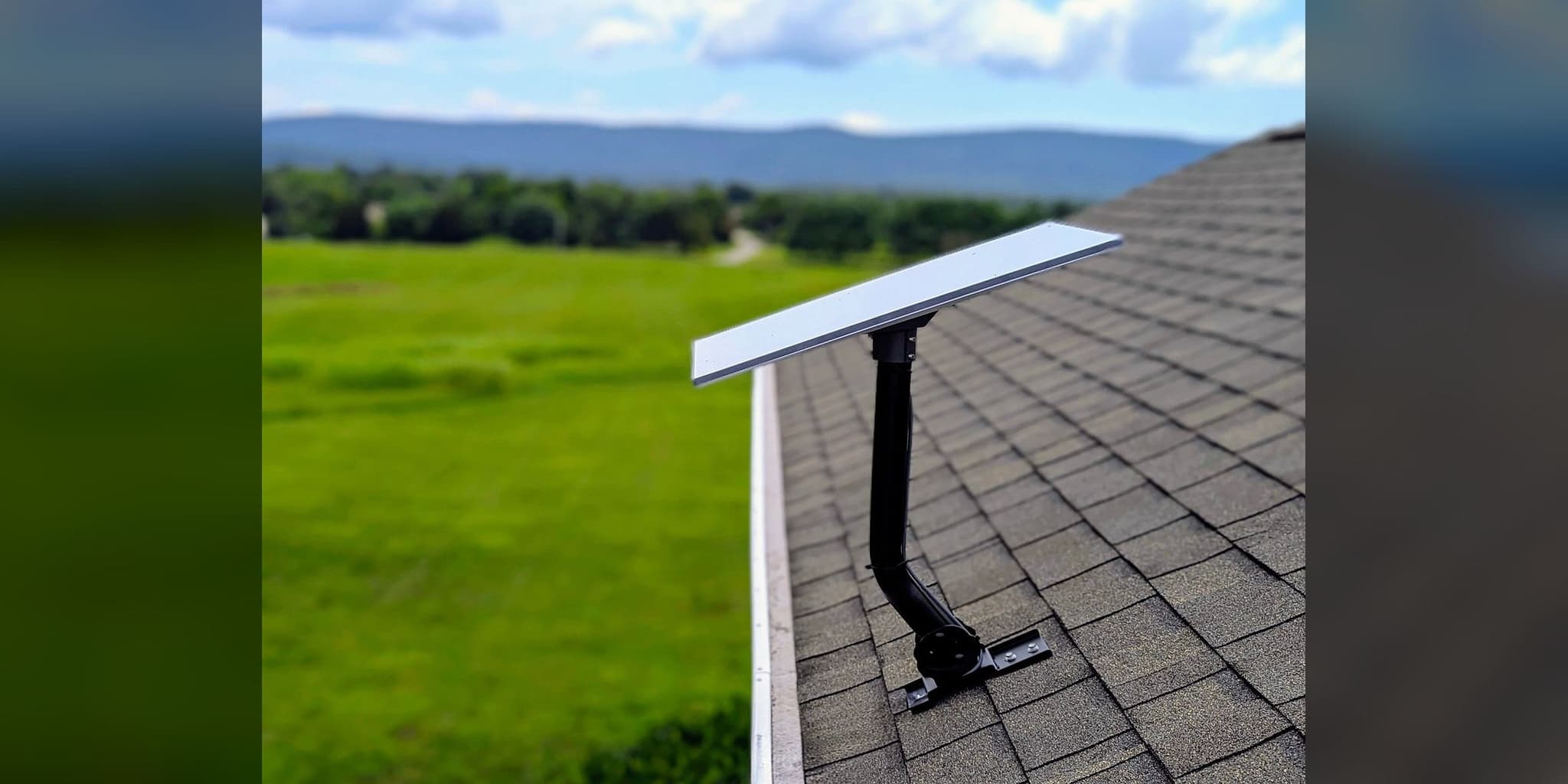
Roof mount positioned to clear the canopy, with the ridge line beyond
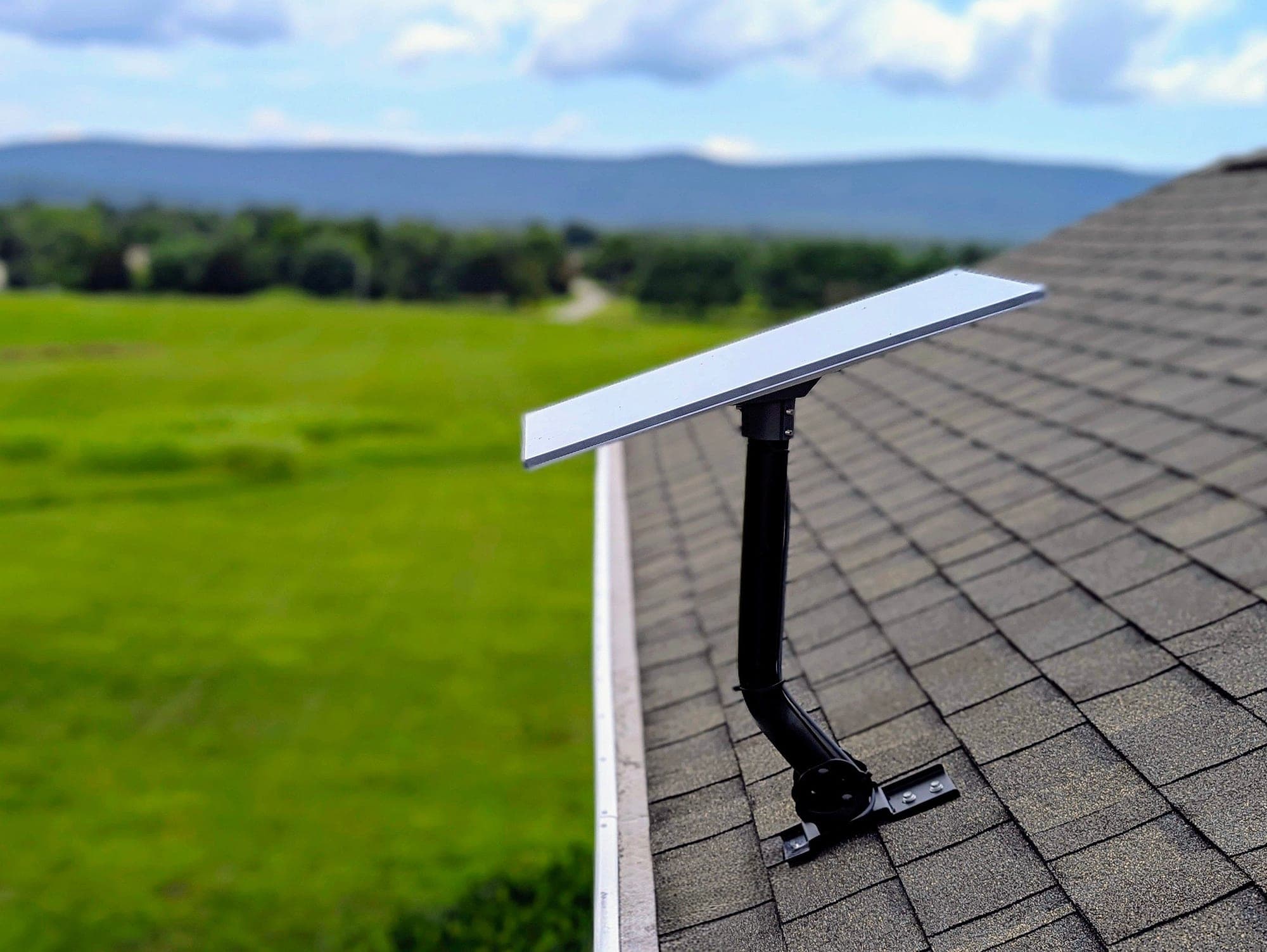
Dish and mast at the roof edge
This deployment applies architecture documented across our service methodology:
Services Deployed
Equipment Manifest
- Starlink Standard Kit
- Roof mounting kit
- Lightning arrestor
- 200ft Cat6 cable
- Cable concealment system
Related Services
Related Case Studies

Planning something similar?
Tell us how the property is built, where service breaks down, and what has to stay online. We'll recommend the next step, and a paid assessment only if the property needs one.
The first conversation is free, and Eric Enkh replies personally.