
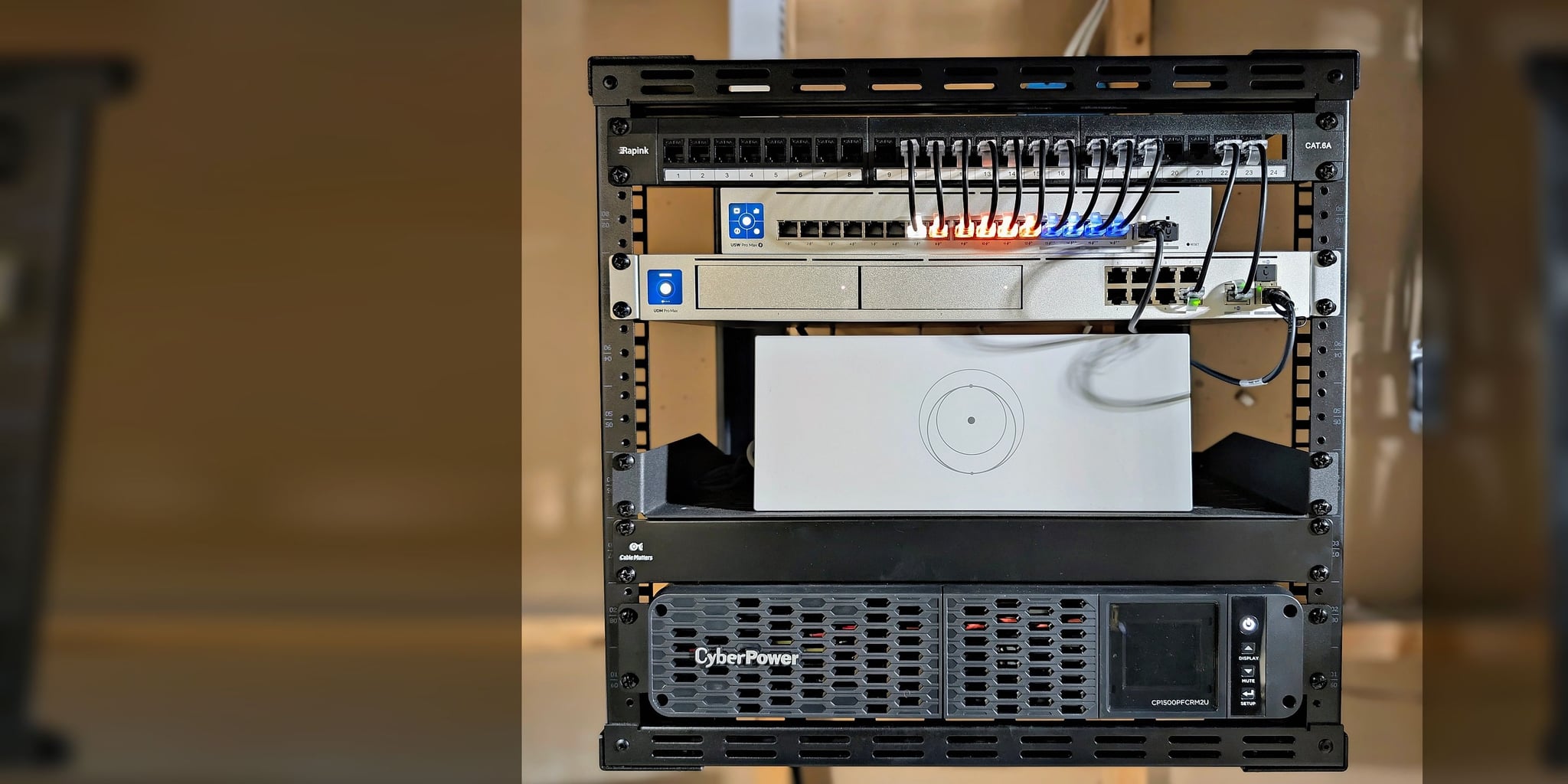
Executive AI Infrastructure · Northern Virginia & Montgomery County, MD
A home office network planned for AI tools that do real work.
If AI tools on your work computer open files, run code, or work through websites, it helps to decide what that computer shares a network with. We give work its own network, place and wire the work computer, add backup internet where work depends on it, and write it all down.
The first conversation is free, and Eric Enkh replies personally.
The shift
Why the network matters for AI tools.
Many AI tools used for work now read files, drive a browser, or connect to other services from your computer. That does not make them dangerous. It does mean the computer doing that work shares a network with everything else in the house: guests, TVs, smart-home devices. A separate network changes what each side can reach. It does not change what the software itself is allowed to do; that stays with the software's settings and your IT or security advisor.
Typical home network
- One network carries everything
- Guests and household devices can reach the work computer
- Nobody has a written list of what is on the network
- What happens in an outage is found out during the outage
Separate network for work
- Work computers have their own network
- Guests, TVs, and smart-home devices stay on theirs
- Every device has a known role and a name
- Backup internet and battery behaviour are set up and tested
Scope of design
The infrastructure layer we design.
These five layers depend on each other in order. Separation is what makes a workstation role meaningful; documentation is what keeps any of it true a year later.
- 01
Network separation
A separate network for work computers, apart from guests, cameras, TVs, and smart-home devices.
- 02
Dedicated workstation role and placement
The computer used for important work gets a planned place on the network, wired where the house allows.
- 03
A review workstation, set apart
The workstation where consequential work is reviewed gets its own place and its own network segment. Approval rules inside the software stay with your IT or security team.
- 04
Device visibility and documentation
A recorded inventory of what is on the network and what each device is for, readable without the installer present.
- 05
Continuity, power, and recovery behaviour
Secondary WAN where appropriate, protected power for the core, and recovery behaviour verified at commissioning.
Method
How The Orbit Protocol applies to AI-enabled environments.
The Orbit Protocol is the method behind every engagement. Applied to this category, it compresses to three phases.
- 01
Map the environment
Topology, device roles, dependencies, power, and WAN continuity documented as they actually are.
- 02
Design the boundaries
Separation, workstation placement, the approval boundary, and behaviour under failure — defined before changes.
- 03
Document and transfer
Findings, priorities, architecture recommendations, and an operating baseline the owner can actually read.
Field record
Built on field-tested executive infrastructure.
This category is new. The engineering underneath it is not — the same work already deployed in executive residences and estates across the region, led personally by Eric Enkh.
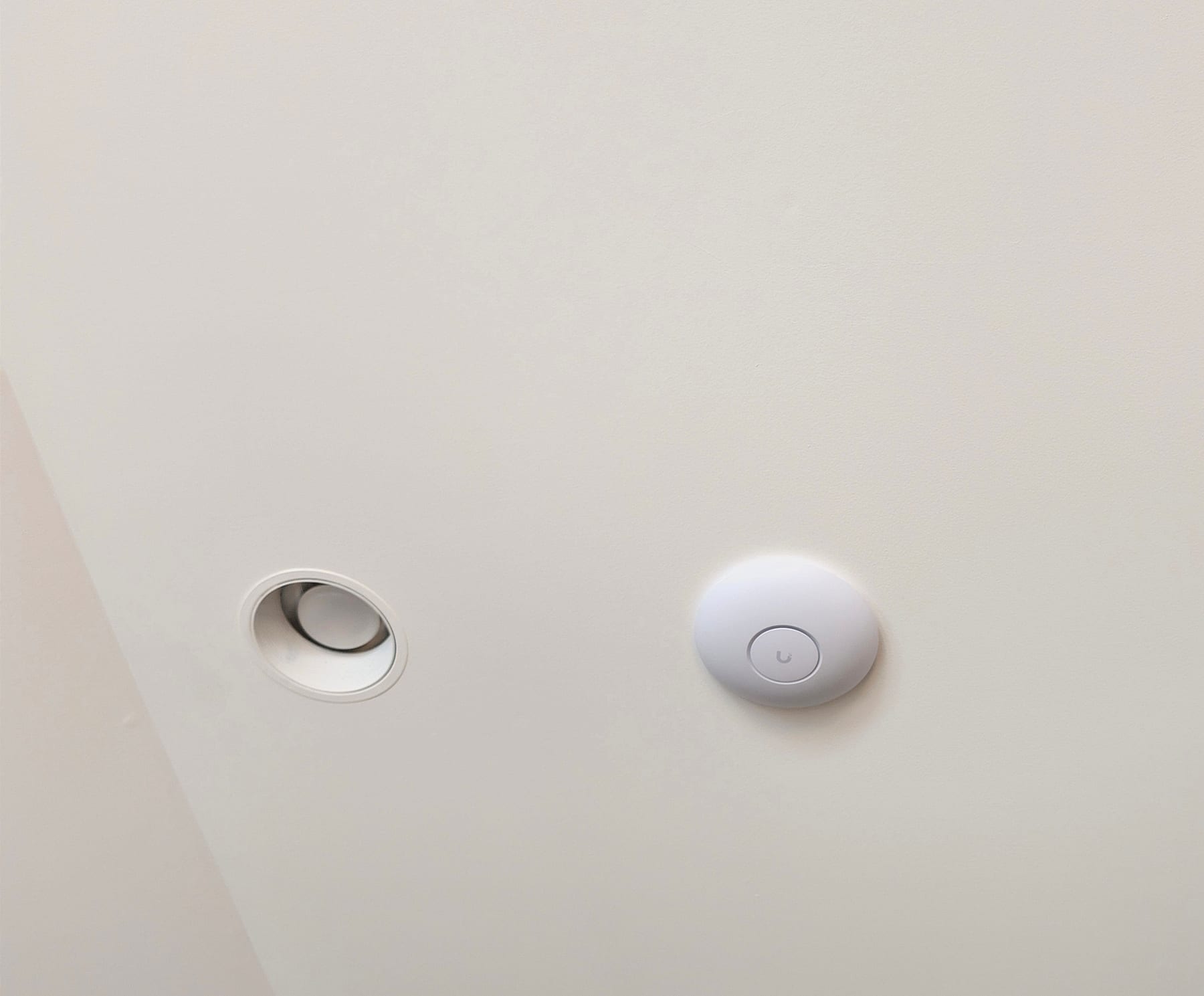
Executive Resilience System · Potomac, MD — dual-WAN failover, WiFi 7 coverage, UPS-protected core. View the case study
Deliberate network segmentation
Separate network segments for guest, media, smart-home, and work devices, with rules for what each can reach, are standard practice in our builds.
Locally managed UniFi infrastructure
Gateways, switching, and access points managed on the property, every device named by location.
Dual-WAN and Starlink continuity
Secondary WAN paths with explicit gateway policy, failover verified at commissioning.
UPS-backed network cores
Protected power on a dedicated circuit, so the core rides through the utility events that take a residential setup down.
Deployments shown are existing infrastructure projects — evidence of capability, not clients of this service.
Engagement
Start with clarity, not a pre-sold build.
Every engagement opens with a no-charge review. If an assessment is not the right next step, we say so.
- 01
Initial Project Review
No charge
We review the property, the workflow, and what you are trying to protect, then say plainly whether this is the right engagement.
- 02
Executive AI Infrastructure Assessment
When warranted
A founder-led, on-site review of the environment, recommended only when it is needed. Its fee is confirmed before booking, and any work after it is scoped and priced before it begins.
- 03
Infrastructure deployment
Optional
Implementation of the agreed architecture, scoped separately — nothing is pre-sold on the assumption that changes are needed.
- 04
Later review
By arrangement
Environments change. A later review can be scoped when the documentation needs to catch up.
The first conversation is free, and Eric Enkh replies personally.
Fit
Who this is for, and who owns what.
Executives and founders
AI-enabled workflows now touch live business operations from a home or estate office.
Family offices and private principals
Residential, guest, and operational traffic currently share the same environment.
Defense-adjacent and continuity-dependent professionals
Work requires deliberate separation, stable connectivity, and documented local infrastructure.
Where the boundaries sit
These three scopes stack rather than overlap.
- The Orbit Tech
- Network architecture, workstation placement, continuity, power, and documentation.
- Your IT or cybersecurity team
- Endpoints, applications, identity and access, detection, response, and compliance.
- You and your advisors
- Business and financial credentials, approvals, signing, and every decision made on top of the environment.
We do not audit endpoints, applications, browser extensions, or connected services, and we do not hold the credentials for your business or financial accounts. The network's main account is yours; any support access we keep is a separate account you can remove. This work makes an environment more deliberate; it does not promise complete protection or remove risk.
Questions
Common questions.
- Is this a cybersecurity service?
- No. This is infrastructure architecture. We design the local layer — network separation, workstation placement, continuity, power, and documentation. Endpoint security, application security, identity and access management, detection, and compliance stay with your IT or cybersecurity team. The two scopes stack; they do not overlap.
- What does the Executive AI Infrastructure Assessment include?
- An on-site review of the environment, delivered as a document: a current-state infrastructure map with device roles, priority observations in order, recommended architecture and boundaries, and an implementation and review roadmap. It closes with a private debrief. Scope and pricing are confirmed after the Initial Project Review, not before it.
- Can this work with an existing UniFi network or IT provider?
- Usually, yes. Existing UniFi infrastructure is often kept and reconfigured rather than replaced, and the assessment identifies what can stay, what should change, and what needs clearer documentation. Where you already have an IT or security provider, the output is written to hand to them, with the boundary between our scope and theirs stated explicitly.
- Do you handle passwords for business or financial accounts?
- No. We do not hold or use the credentials for your business applications, financial accounts, wallets, or signing decisions; approval authority stays with you and your advisors. The network equipment's main account is set up in your name, and any support access we keep is a separate account you can remove.
- What happens after the assessment?
- You own the documentation regardless of what you do next. If changes are warranted, we can scope an implementation from the findings. If the environment is already sound, the result may simply be cleaner separation, better documentation, and a review cadence. Implementation is quoted separately and is never assumed.
Next step
Make the environment beneath AI-enabled work intentional.
Start with a free conversation about the property and the workflow. We confirm whether this is the right engagement and recommend the next step.
The first conversation is free, and Eric Enkh replies personally.